
Protect your motors and generators from overheating
Stator slot RTD sensors for motors and generators
Stator slot RTD sensors are embedded directly within the stator windings of motors and generators to provide localised temperature monitoring. Also known as winding temperature detectors (WTDs), they help detect overheating before it causes insulation damage, equipment failure or unplanned downtime.
Product summary
- Accurate temperature monitoring
- Enhances motor longevity
- Improves efficiency
- Early failure detection
- Ensures safety and cost savings
Stator slot RTD sensor specifications
| Specification | Available options |
|---|---|
| Sensor type | Stator slot RTD / Winding Temperature Detector (WTD) |
| Standard sensing element | Pt100 |
| Other elements | Pt1000, Copper, Nickel, Type K thermocouple |
| Element configuration | Single or duplex |
| Length | 30–5000 mm |
| Typical thickness | 1.3–2.0 mm |
| Wiring | 2-, 3-, 4-, 6- or 8-wire |
| Tolerance class | Class A or B |
| Construction | Flat, thin and bifilar |
| Hazardous-area options | ATEX, IECEx, KTL, KGS, BV Marine options |
| Manufacturer | SMG, South Korea |
| Standard delivery time | 3–4 weeks, depending on design/configuration |
Understanding the function of stator slots
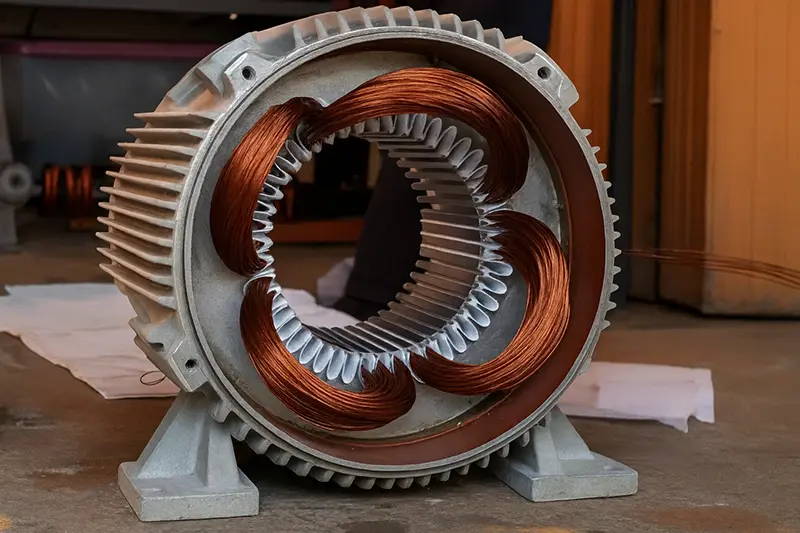
Electric AC motors and generators consist of two key components: a stationary stator and a rotating rotor. To ensure these vital parts operate safely and efficiently, effective thermal protection is essential, because most motor failures start with overheating of the stator windings.
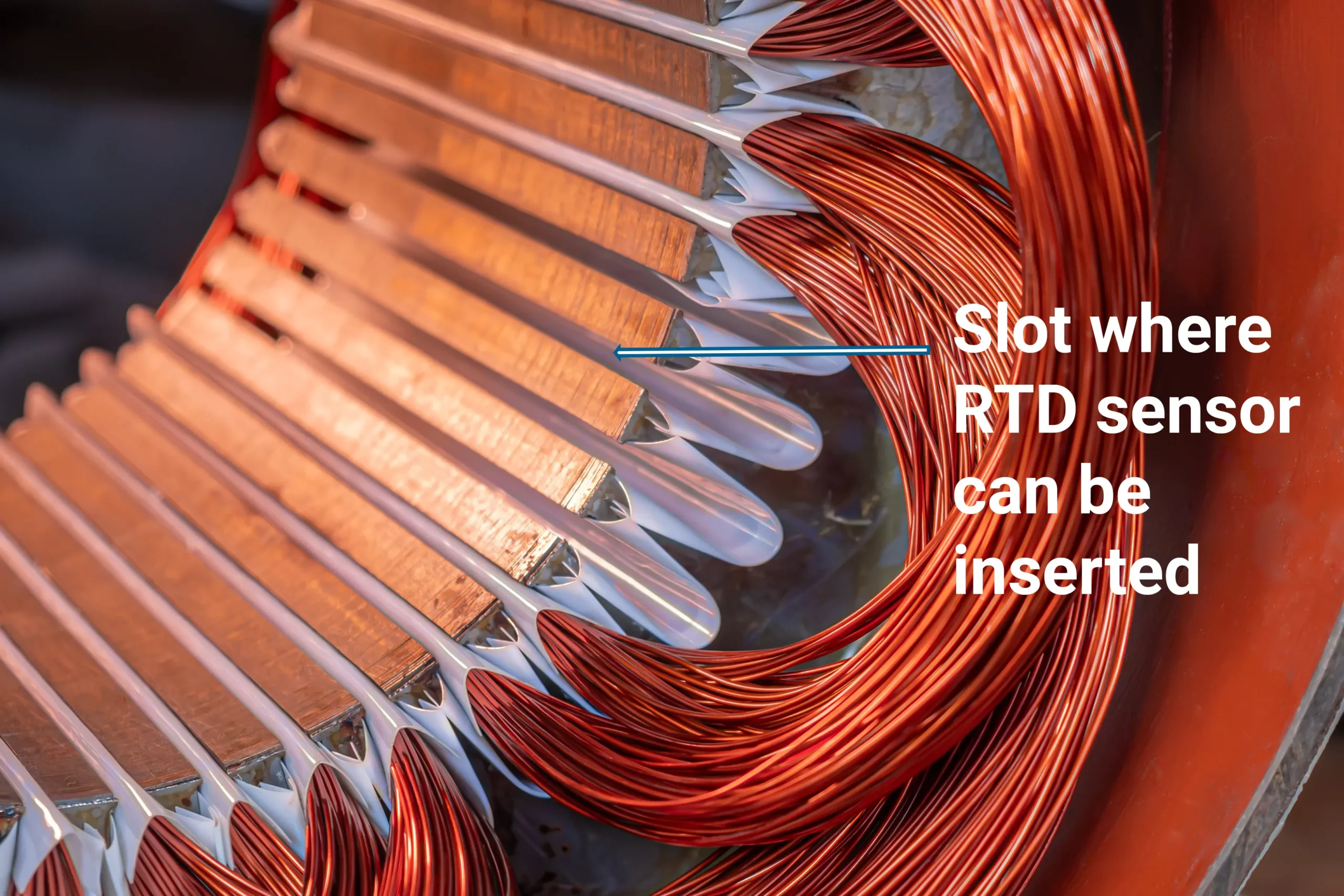
Stator slots play an important role in this: they are long, narrow grooves in the stator core that hold and secure the copper windings. When AC current flows through these windings, a magnetic field is formed inside the slots and drives the motor. The slot design ensures the windings stay in place, are electrically insulated, and can be effectively cooled, which is crucial for safe and efficient operation.
Preventing motor failure with RTD sensors
Stator slot resistance temperature detectors (RTDs) provide highly accurate temperature monitoring inside the motor’s stator slots, protecting your equipment from overheating, insulation degradation, and costly unplanned downtime.
Overheating is the main enemy of motor insulation. For every 10°C increase in temperature, the insulation lifetime is cut in half. Electrical problems account for 47% of all motor failures, and winding failures alone make up 37%, showing how critical proper temperature monitoring is for protecting motor insulation.
This stator slot RTD sensor plays a major role in preventing extremely expensive motor damage. Large motors typically use six or more stator slot RTD sensors to ensure reliable, safe operation
under all load conditions.
Stator slot applications across industries
Stator slot RTDs or winding temperature detector (WTD) are used across many sectors where reliable electric motors and generators are critical, including:
- Hydroelectric power stations
- Wind turbines
- Industrial manufacturing environments
- Heavy-duty electric machinery and generator systems
In all these applications, precise temperature monitoring leads to:
- Increased motor longevity
- Improved operational efficiency
- Early detection of faults or abnormal voltage conditions
- Enhanced safety during high-demand operations
- Reduced maintenance costs due to fewer insulation failures or mechanical breakdowns
How does a stator slot RTD sensor work?
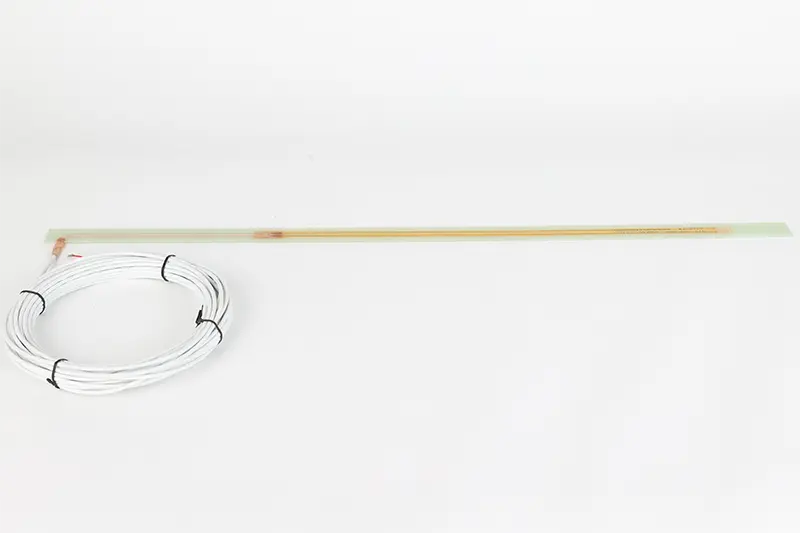
Stator slot RTDs use sensing elements along most of their length, allowing for continuous average temperature readings across a broad area. This design ensureslocalized hot spots are detected, providing a complete and responsive view of the thermal profile within the stator slot.
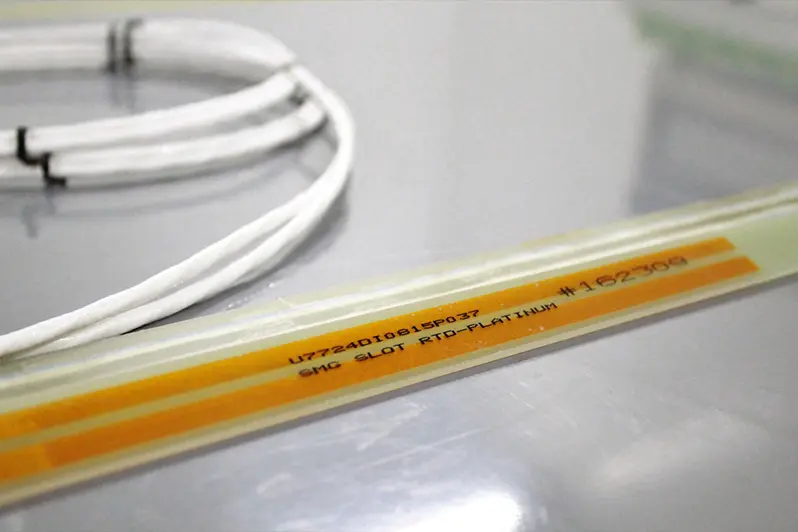
A stator slot RTD is positioned directly within the stator winding to measure temperature close to the area where overheating can occur. SMG stator slot RTDs use a flat, thin and flexible construction for installation between windings, with bifilar construction to avoid induction-related errors.
Key characteristics include:
- Flexible, non-inducible materials for optimal fit and performance
- Flat and thin design for seamless embedding between windings
- Bifilar construction to avoid induction-related errors
- Durability under shock, vibration, and pressure
- High accuracy, repeatability, and long-term stability
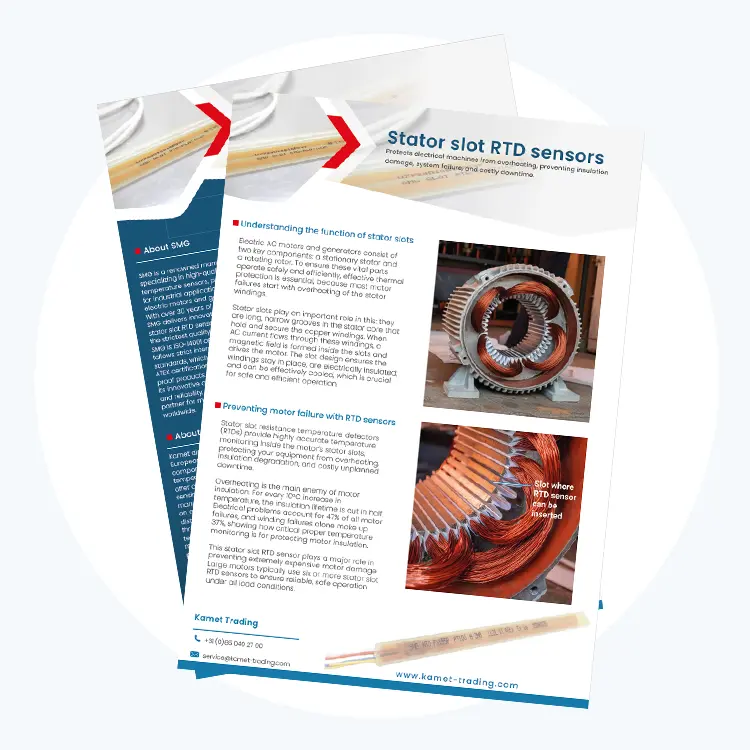
Download the stator slot RTD sensor leaflet
Download the stator slot RTD sensor leaflet for a quick overview of its added value, technical specifications, and typical applications.
"*" indicates required fields
How do you select a stator slot RTD sensor?
Selecting a stator slot RTD depends on the required sensing element, sensor length and thickness, single or duplex construction, wiring configuration, tolerance class and any hazardous-area certification requirements. Most stator slot RTDs are custom-built for the specific motor or generator application.
Our stator slot RTDs are manufactured by SMG in South-Korea. Trusted globally, SMG delivers high-performance thermal protection backed by proven Korean engineering. Most of their stator slot RTDs are delivered as custom-built solutions, tailored to the customer’s exact application and performance requirements.
Each sensor is calibrated and built to match your system requirements. Our engineers are happy to assist in selecting the best design for your application.
Available specifications:
- Type of element: Pt100 (standard), Pt1000, Copper, Nickel, Type K thermocouple
- Single or duplex elements
- Lengths: 30 mm up to 5000 mm
- Thickness: typically between 1.3 and 2.0 mm
- Body with: depending on singel or duplex system
- Wire configurations: 2-, 3-, 4-, 6 or 8-wire systems
- Tolerance class Class A or B
- Hazardous area options: certified intrinsically safe and increased safety versions (ATEX, IECEx, KTL, KGS, BV Marine)
Let us help you find the best product
When doing business with Kamet, you can rely on fast and responsive customer service and consistent quality.
- Response time: within 24 hours on working days
- Delivery time: 3–4 weeks depending on design and configuration
Our team is ready to help you with technical advice, customization options, or quotations.
What do our customers say about us?
Highly recommended!
Kamet is well aware of its customers’ needs and has accompanied us through numerous projects. I enjoy working with them because they are responsive, everything is well organized, and they are all efficient and ready to help us.
They have developed their online portal, and I now have access to accurate information such as our prices, their stock and future deliveries, and values from certificates of calibration.
I highly recommend working with them.
Our wishes and suggestions are taken into account and if problems arise, we work together to find and implement a solution.
We look forward to many more years with Kamet as a business partner.
We specialize in vacuum brazing of heating cables to stainless steel, copper and other alloys for components which on occasions are not serviceable items and hence the quality of the cables from a brazing perspective, workability, and performance with a long life expectancy of 7 to 10 years are critical. The quality of their heating cables is unparalleled, ensuring reliable performance and longevity even under the most demanding conditions especially in high vacuum and extreme temperature environments. The commitment to excellence throughout the supply chain which Kamet have established is evident in their premium products tailored to specific requirements of our most stringent quality control requirements.
Over the years Kamet have become a strategic supplying partner for us and we highly recommend them.


