
Heating plates
Heating plates are precision heating elements used in applications that require accurate temperature control, high thermal conductivity and resistance to elevated temperatures. Customisable dimensions and power ratings allow efficient heat distribution and can reduce the number of heaters required within a system.
Heating plates are commonly used in semiconductor manufacturing, material processing and high-tech laboratory environments.
Product summary
- Available in a range of materials and configurations
- High-precision heating
- Excellent thermal conductivity
- Kamet offers mica, metal and various ceramic heating plates
Different types of industrial heating plates
Kamet offers several types of heating plates, each with specific properties that can be matched to the requirements of the application:
Mica heating plates – A cost-effective and versatile solution for operating temperatures up to 500°C. Mica heaters offer a fast thermal response and can be produced in thin, lightweight designs. Depending on the construction and application, limitations may include temperature uniformity, outgassing and reusability.
Metal heating plates – A robust solution for applications up to approximately 400°C, offering excellent durability and precise temperature control. Different integration methods can be used depending on the required thermal performance and application.
Ceramic heating plates – Designed for demanding high-temperature applications, with some materials suitable for temperatures up to 1200°C. Ceramic materials can provide excellent thermal performance, electrical insulation and durability.
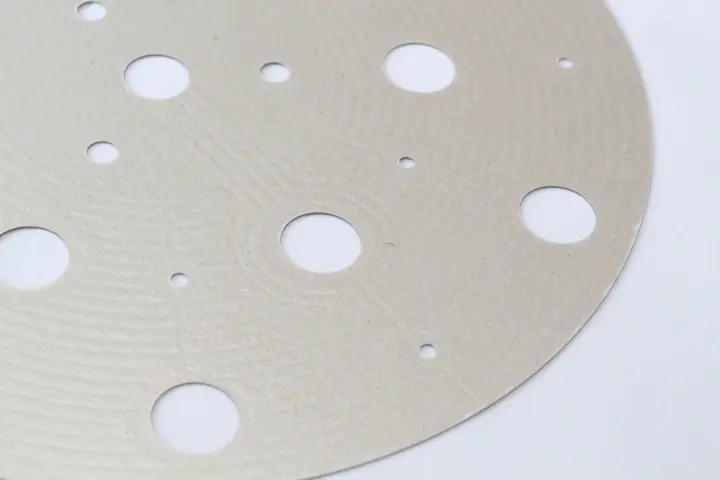
Mica heating plates
These heaters are made using a thin austenitic stainless steel heating element, which is either etched or compressed between layers of mica prepreg insulation (mica powder combined with a silicone binder). The mica layers provide excellent dielectric strength and heat resistance, ensuring efficient heat distribution while maintaining electrical insulation. The heater is securely clamped or bonded to a heat sink or application surface to maximise heat transfer and temperature uniformity. This thin and high-density design allows for rapid temperature changes, making it suitable for dynamic thermal processes.
Kamet works with the established Korean manufacturer SMG to supply high-quality mica heating plates that combine reliable performance with cost-effective construction.
Specifications
- High temperature resistance in the range: -50 to + 500°C
- Thin, lightweight with base thickness: 0.8mm to 2mm
- Size: 600mm × 500mm (custom sizes available)
- Maximum power density at 25°C in open air: 3W/cm2 (other power ranges are possible)
- Uniform heat distribution: (100°C): ±1°C
- Excellent Insulation: 1000V (60 sec)
- High insulation resistance 1000Ω (500V)
- Resistance tolerance ±10% based on room temperature
- Terminal handling: brazing
- Lead wire: horizontal or vertical withdrawal Option Connector
- Customizable: various sizes with different terminal and lead options.
Applications Mica heating plates
Mica plate heaters are widely used in applications that require fast, precise and reliable thermal management, including:
- Semiconductor industry – wafer heating and bonding processes to maintain controlled temperatures during production.
- Medical equipment – Integrated into laboratory devices, sterilisation equipment, and diagnostic instruments.
- Military equipment – Applied in defence-related electronic and mechanical systems requiring stable and robust heating solutions.
Metal heating plates
Metal heating plates are resistant to high pressure and high temperatures and are very effective due to the excellent heat transfer characteristics of the material. Our stainless steel heating plates are corrosion-resistant and durable with excellent thermal conductivity.
Applications of metal heating plates span a range of industries. In components manufacturing, they help reduce soldering times, improving efficiency. The wood and paper industry uses them for processes such as lamination and the application of hot adhesives. In moulding and mould-making, including the production of polyurethane (PU) foam, thermal systems support consistent shaping and curing. The food and beverage industry benefits from their role in pasteurisation, fermentation, and ensuring optimal thermal energy transfer, all while upholding stringent hygiene standards.
Specifications
- Heater wire diameter: Ø0.8 < Ø3.2 with varying resistance values
- Insulation resistance: 1MΩ at 500V
- Withstand voltage: 1Kv/min
- Maximum operating temp: ~ 400°C
- Maximum product size: ~ 122 cm
- Maximum thickness: ~ 4T (four times the thickness of the heater wire)
- Input Voltage: changeable
Manufacturing metal heating plates
The design involves arranging our CVX heaters in a meandering pattern and then housing them in stainless steel. This is done either through vacuum brazing or by mechanically clamping them within the heating plate.
Vacuum brazing
For vacuum-brazed heating plates, the CVX heating elements are positioned in grooves or recesses machined into the metal plate. The complete assembly is then heated in a vacuum furnace, where a brazing alloy forms a strong thermal and mechanical bond between the heating element and the plate.
Vacuum brazing provides efficient thermal coupling and minimises air gaps between the heater and the surrounding metal, supporting effective heat transfer and improved temperature uniformity.
Mechanical clamping
In the case of mechanical clamping, the CVX heaters are laid into especially etched grooves in the plate. The heaters are then clamped using the plate or a clamping construction. The advantage of this method is that it is much less technically complex than vacuum brazing. In addition, the heaters remain flexible and are easily detachable. The disadvantage of mechanical clamping is the thermal transfer is less efficient due to small air pockets being unavoidable in the structure.
The German company, ThermoExpert manufactures both types of metal heating plates for Kamet. They have decades of experience in providing reliable, quality products.
Ceramic heating plates
These heaters involve a ceramic heating element, often made of ceramic plates or coils, which heat up when an electric current passes through them. The properties depend on the materials used.
Kamet supplies all four types of ceramic heating plates through our partnership with the Korean company, SMG. Their quality, reliability and innovative approach ensures we offer ceramic heating plates of a high standard.
- Aluminium Nitride (AlN): excellent heat transfer, temperature uniformity and insulation.
- Silicon Nitride (Si₃N₄): good thermal shock resistance, mechanical strength and durability
- Quartz: high temperature and chemical resistance with exceptional purity.
- Alumina (Al₂O₃): can be cost-effective as well as offering good insulation and vacuum compatibility.
Specifications and applications
| Material | Thermal Conductivity | Maximum Temperature | Applications | |
|---|---|---|---|---|
| Aluminum Nitride (AlN) | 140-220 W/m.K | ~1000 °C | Vacuum environments as well as precision heating applications such as wafer processing (semiconductor industry) and DNA amplification (laboratory equipment). | |
| Silicon Nitride (Si₃N₄) | Lower than AIN | ~800 – 1000 °C | Harsh industrial environments, such as aerospace and petroleum and chemical works. | |
| Quartz | Moderate:~1.4 W/m.K | Very high: >1200 °C | Optical and laser industries and ultra-high temperature applications. | |
| Alumina (Al₂O₃) | 20-30 W/m.K | ~1000 °C | Laboratory heating applications, semiconductor industries and vacuum processes. |
Kamet’s heating plates
Kamet works with SMG and ThermoExpert to supply this wide range of heating plates in the highest quality. We build on long-standing relationships with our manufacturing partners, thus ensuring we offer excellent quality, reliability and innovation to our customers.
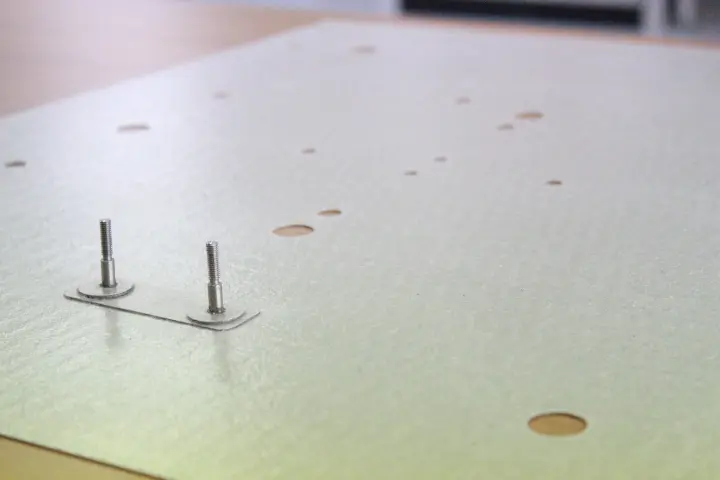
Our team of specialists are on hand if you need any advice about the heating set-up best suited to your application/process. In addition, customisation options for our heating plates can be discussed such as shape, size, voltage options, clamps or thermocouple holes. We look forward to hearing from you!
Reach out to us to discuss your specific needs
Contact our team today and we will help you select a suitable heating solution for your application.