
Reliable performance in extreme low-temperature environments
Cryogenic solutions
Cryogenic environments place extreme demands on materials, signal stability and temperature measurement accuracy. From dilution refrigerators and quantum computing systems to aerospace and hydrogen applications, components must perform reliably under ultra-low temperatures, vacuum conditions and repeated thermal cycling.
Kamet offers a range of cryogenic solutions designed for these demanding environments, including mineral insulated coaxial cables for stable signal transmission and high-precision platinum cobalt sensors. Our solutions combine mechanical robustness, vacuum compatibility and engineering-driven customisation to ensure reliable performance in critical systems.
Product summary
- Designed for cryogenic and vacuum environments
- Reliable performance under thermal cycling
- High-precision measurement and signal stability
- Vacuum-compatible (low or no outgassing)
- Engineering support and custom solutions
- Suitable for research, semiconductor and aerospace applications
The available types of cryogenic solutions
Cryogenic coaxial MI cable assemblies
Reliable signal transmission in extreme cryogenic and vacuum environments, designed for dilution refrigerators and quantum systems.
- Fully inorganic design, no outgassing in vacuum
- Stable performance under thermal cycling
- High mechanical robustness compared with conventional coaxial cable
- Custom impedance and configuration options
Cryogenic cobalt resistance sensor
Ultra-precise temperature measurement down to 1.5 K, designed for demanding cryogenic and scientific applications.
- Exceptional accuracy in below 4K(-269°C)
- Minimal drift under thermal cycling
- Low sensitivity to magnetic fields
- Based on proven CERACOIL technology
Looking for another solution?
Contact Kamet to discuss your cryogenic design requirements. We work with a broad range of international manufacturers and support you in defining the optimal solution.
Get in touchTemperature measurement in cryogenic environments
Accurate temperature measurement in cryogenic environments presents challenges far beyond conventional applications. Near absolute zero, material properties change significantly: electrical resistance becomes highly non-linear, thermal conductivity varies, and even small heat inputs can distort results. As a result, sensor selection, signal transmission and system integration must be carefully engineered to ensure reliable and reproducible data.
A key consideration is sensor stability and repeatability at very low temperatures, especially below 20 K and in the sub-4 K range. In this regime, conventional platinum RTDs (Pt100 / Pt1000) lose sensitivity, while alternatives such as silicon diodes may suffer from magnetic field sensitivity and self-heating. Platinum-cobalt sensors provide a clear advantage, offering a stable and well-defined resistance-temperature relationship down to approximately 1.5 K.
In addition to the sensor, reliable signal transmission from the cryogenic environment to the measurement electronics is critical. Cryogenic coaxial MI cable assemblies ensure stable performance in vacuum and low-temperature conditions where conventional cables may fail due to outgassing, thermal contraction or material degradation. They are widely used in applications such as dilution refrigerators, where signal integrity and mechanical robustness are essential.
Another key factor is thermal coupling and minimisation of heat leakage. Sensor installation must ensure good thermal contact with the measured object while avoiding conductive heat paths through lead wires or mounting structures. Measurement currents must be kept low to prevent self-heating, especially in vacuum environments where convective cooling is absent. In addition, repeated thermal cycling between room temperature and cryogenic conditions introduces mechanical stresses that can affect long-term sensor stability, making robust construction essential.
Finally, system-level considerations such as signal integrity, wiring, and integration into vacuum or hermetic environments play a critical role. The combination of high-precision sensors with vacuum-compatible cabling and appropriate termination techniques ensures that the measured signal accurately reflects the true temperature, even under the most demanding cryogenic conditions.
Why cryogenic environments are essential
Cryogenic environments are not only used to reach low temperatures, but to fundamentally enable physical phenomena that are impossible at higher temperatures. As systems approach absolute zero, thermal noise is drastically reduced, material behaviour becomes more predictable, and effects such as superconductivity and quantum coherence can emerge.
This is particularly important in dilution refrigerators. These systems cool down to temperatures in the 10–20 millikelvin range, where quantum devices and highly sensitive measurement setups can operate. At these temperatures, even the smallest heat input or electrical disturbance can disrupt system performance, making thermal stability critical for signal integrity.
An important challenge in these environments is not only temperature control, but also the management of electrical noise and heat transfer. High-frequency noise (such as RF or Johnson noise) can interfere with measurements, while conductive materials can introduce unwanted heat into the coldest stages. For this reason, specialised components are required. For example, mineral insulated (MI) coaxial cables are used as natural low-pass filters, reducing high-frequency noise while limiting thermal conduction towards the coldest stage.
In addition, signals must be transmitted from the cryogenic environment to external measurement systems without distortion. This requires materials and designs that remain stable under extreme thermal cycling and vacuum conditions. At the same time, accurate temperature measurement down to a few kelvin or even millikelvin is essential to monitor and control the system, requiring highly stable sensor technologies such as platinum-cobalt RTDs.
As a result, every component inside a cryogenic system — from sensors to cabling and connectors — directly contributes to overall system performance. A well-designed cryogenic environment ensures not only low temperatures, but also clean signals.
In addition to the sensor, reliable signal transmission from the cryogenic environment to the measurement electronics is critical. Cryogenic coaxial MI cable assemblies ensure stable performance in vacuum and low-temperature conditions where conventional cables may fail due to outgassing, thermal contraction or material degradation. They are widely used in applications such as dilution refrigerators, where signal integrity and mechanical robustness are essential.
Why choose Kamet for your cryogenic sensors?
Ultimately the choice of a sensor depends on many specifics. Kamet has been in the temperature world for many years and has extensive knowledge of the industry and the latest developments. The fact that we supply different types of platinum temperature sensors makes us your ideal advisor and supplier.
Kamet’s commitment to quality is reflected by the choice to partner with expert suppliers in the field:
- Okazaki Manufacturing Company for the cryogenic sensors and assemblies
- ARi Industries, for extreme temperature thermocouples and cables

More about sensors for extreme environments

Choosing the right thermocouple for different industrial atmospheres
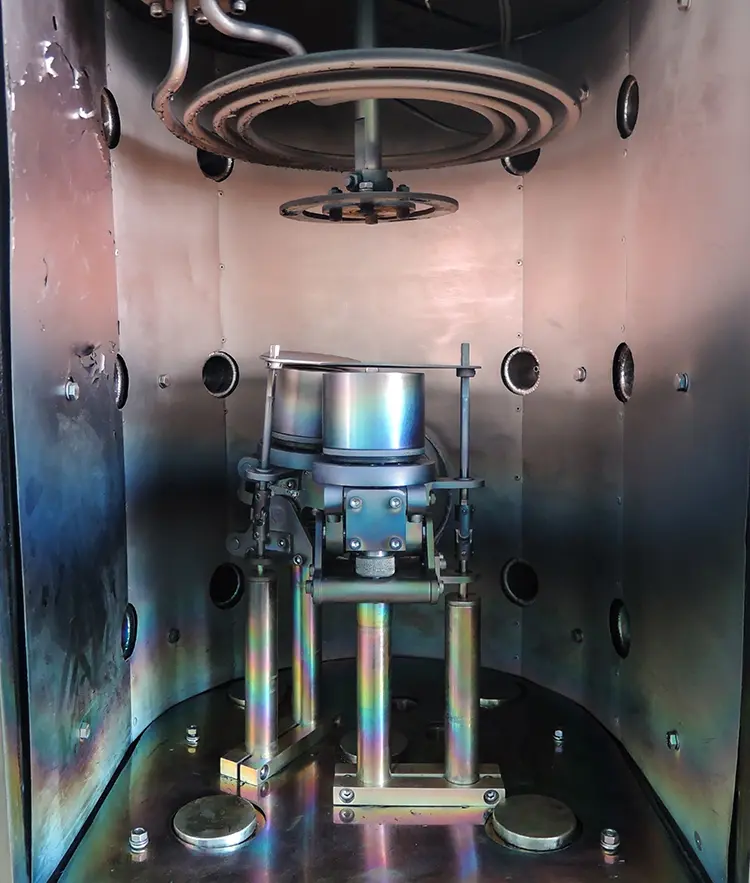
Using high-temperature thermocouples in vacuum furnaces

Using high-temperature thermocouples in the glass manufacturing and furnaces

Using ultra-high-temperature measurement in heat treatment (furnaces)

Using high-temperature thermocouples for incineration kilns

Using high-temperature sensors in pyrometallurgy

High-temperature thermocouples for Hot Isostatic Pressing (HIP) Furnaces

Why the manufacturing process for Type C thermocouple wire is so difficult

Sapphire sheath material for thermocouples for oxidising environments

What are the delivery times of non-stock items?

What are refractory metal thermocouples?

What you need to know about compensating and extension wires for type C and D thermocouples
What is the highest temperature thermocouple wire?

How to choose the right thermocouple for your application

How to choose the right sensor technology: RTD or thermocouples

What causes a thermocouple sensor to fail?

When to use a thermocouple and which type to choose
Mineral insulated solutions for fuel cells
